Australian Energy & Product Prices for Bioenergy Projects
A credible bioenergy project needs more than a production forecast. It needs an evidence-backed price for what the plant buys, and a realistic value for what it can sell.
Explore Australian electricity, natural gas, bulk food-grade liquid CO₂ and hydrogen pricing in one place. Compare historical observations and forward scenarios while keeping location, customer type, product specifications, delivery costs, tax treatment and source dates visible.
Shelby's Pricing Intelligence brings market benchmarks together with the project-specific quotations and commercial assumptions needed for preliminary feasibility. Not all products have a transparent public transaction market. When evidence is missing, we say so.
Use these figures for preliminary screening. Actual commercial decisions require current quotations, contracts and qualified professional assessment.
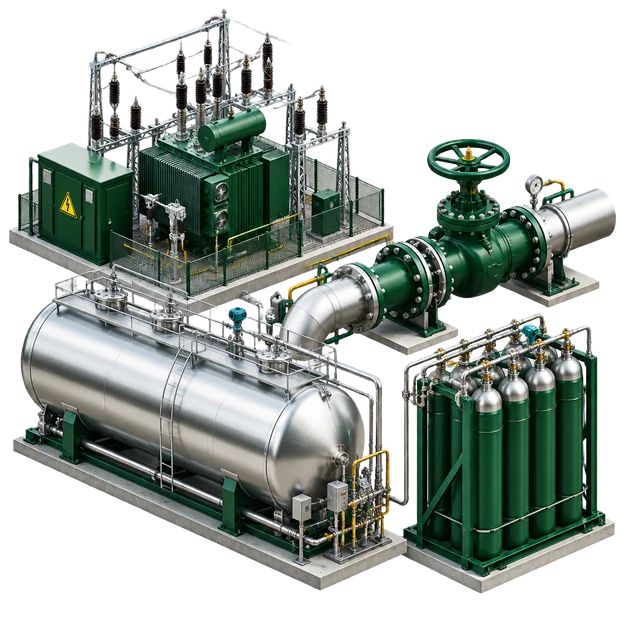
Four markets. Different price structures. One consistent assessment.
Electricity · AUD/MWh, excluding GST
Evaluate electricity purchased by an Australian project, including evidenced energy, network, retail, demand and applicable non-GST charges where included in the selected price boundary. View electricity sold or exported as a separate price category. The wholesale spot price is not the all-in customer electricity bill.
Natural gas · AUD/MWh HHV, excluding GST
Compare the price industrial customers pay for delivered gas with wholesale hub benchmarks, relevant network/transport components and documented commercial offers. Display the original AUD/GJ HHV as well as AUD/MWh HHV, without mixing different heating-value bases or locations.
Bulk food-grade liquid CO₂ · AUD/tonne, excluding GST
Distinguish food- or beverage-grade bulk liquid CO₂ purchased by a customer from the net price paid to the producer. Purity specification, qualified product, supply volume, storage, delivery distance, distribution margin and contract terms determine commercial relevance. Avoid substituting small-cylinder or retail hospitality prices for bulk industrial transactions.
Hydrogen · AUD/kg, excluding GST
Investigate prices paid for hydrogen meeting a specified purity, pressure and delivery condition. Separate production-cost studies from observed customer transaction prices; hydrogen supplied by tube trailer, pipeline or on-site generation does not have one uniform delivered price.
No verified price series loaded.
Explore price evidence, not just headline numbers.
See how the selected price changes with commodity, state or market region, year, buyer size and the delivery boundary. Compare only records with compatible units and definitions.
Price filters:
- Product: Electricity purchase / electricity export / natural gas purchase / biomethane offtake / food-grade bulk liquid CO₂ / hydrogen (expand to other products after data validation).
- Geography: Australia, state or territory, electricity distribution network, gas market hub, site region/postcode where records permit.
- Transaction: customer purchase / producer sale / wholesale reference / quote / contracted sale / modelled production cost (clearly separate tabs, never a blended price).
- Customer and delivery: volume band, load profile, customer category, delivery point, ex-works / delivered, product grade, purity, pressure and transport form where relevant.
- Time: annual 2016–2025 history, latest available 2026 observation, forecast years 2027–2036.
- Series type: observed, regulated/reference tariff, reported offer, executed contract, anonymised quote, modelled forecast, hypothetical sensitivity.
- Currency: AUD (canonical), USD or EUR (display only); real vs nominal value as clearly separate modes.
Once verified records are available:
- A large price display with unit, geographic scope, observation date and evidence status.
- Historical line chart that shows gaps where no comparable observation is available.
- Forecast fan/range for lower, central and higher-price scenarios only when traceable methodology exists.
- Price-component waterfall (commodity, network, delivery, other tax/levy, total) only for genuinely sourced components.
- Comparison table with years, original units, converted units, sources, confidence and boundaries.
- Transparent 'How to interpret this record' drawer and 'View source' link.
Verified pricing data is being prepared. Shelby is reviewing market benchmarks and project-relevant commercial evidence before publishing historical comparisons and forecast scenarios. You can already use the preliminary assessment tools with your own documented price inputs.
These records cannot be compared directly because their buyer class, delivery boundary, product specification, unit, or observation dates differ. Adjust the filters or view each source individually.
See the record. Understand the outlook.
2016–2025 | Historical observations. Use reported annual values wherever genuinely available. Do not fill missing years with interpolation unless a separate estimated series is explicitly created and labelled.
2026 | Latest available evidence. Display the latest observed prices with exact dates, not as a completed annual average. A year-to-date series must not be presented as the full-year outcome.
2027–2036 | Forecast scenarios. Compare low, central and high scenarios where an auditable forecast method, assumptions and uncertainty ranges exist. Distinguish independent published forecasts from a Shelby scenario constructed from stated assumptions.
For each forecast, show the basis of forward energy prices, transport and network charges, contract structure, inflation, foreign exchange, regulatory assumptions and commercial demand. The forecast should not silently treat a generation-cost projection as a retail electricity-price projection, or hydrogen production cost as the price paid by a customer.
Forecasts are planning scenarios, not supplier offers or guaranteed future prices.
Define the price before comparing the numbers.
A commercial price is meaningful only when its delivery boundary is understood.
An all-in electricity purchase price may include energy, network, retail and demand charges. A gas hub price normally excludes delivery, transport and other customer costs. A bulk CO₂ price may include transport and storage or may be quoted ex-works. Hydrogen prices vary with purity, pressure, supply method and reliability requirements.
Price reporting standard: Prices should exclude GST (the Australian equivalent of VAT) and include other applicable charges or taxes only when actually evidenced within that price record's stated boundary. If a charge is unknown, label the result partial price rather than all-in.
Reference units: Electricity AUD/MWh. Natural gas AUD/MWh HHV and original AUD/GJ HHV (1 MWh = 3.6 GJ on a consistent heating-value basis). Bulk liquid CO₂ AUD/metric tonne, specifying grade and delivery. Hydrogen AUD/kg, specifying purity and pressure/delivery basis. Specify nominal or real currency year.
Understand every material cost and revenue stream.
The full commercial case may also include: feedstock acquisition, transport and receiving/gate fees; wastewater and digestate handling; biomethane and heat sales; electricity export; CO₂ purification and logistics; hydrogen compression and delivery; fertiliser and biochar; renewable or emissions certificates where eligible; water; equipment installation; staffing; maintenance; insurance; land, connection and financing costs.
Each source has a different market, unit, contract structure and degree of price transparency. Keep the cost to create a product separate from the price a buyer is prepared to pay; only count revenue for output that can be qualified, delivered and sold.
A public benchmark is a starting point. Your own price evidence is stronger.
A feasibility screen should use the most appropriate available evidence: first a current signed project contract, then a current written quotation, then an applicable published market reference, and finally an explicitly labelled hypothetical assumption. A confidential customer quote must not become a public market benchmark without authority to use it.
Shelby's project assessments are designed to preserve the location, quantity, product definition, source date and assumptions behind each price. Project owners can investigate how electricity, gas, product sales and delivery affect preliminary economics without treating an indicative benchmark as a secured contract.
Site-specific quotes and commercial documents should be stored privately under the relevant account/project with controlled access and document permissions.
Help make Australian project pricing more useful.
Shelby welcomes conversations with operating biogas and anaerobic-digestion facilities, electricity and gas buyers, industrial gas suppliers, engineering and equipment providers, feedstock owners, project developers and financiers who can contribute to better early-stage assessment methods.
Evidence could include current utility bills, published rate cards, anonymous price ranges, technical specifications, supplier quotes or contract structures. Confidential material is requested only through an agreed, secure process; it will not be published automatically.
Submission does not grant permission to redistribute quotations or commercial terms. Any future aggregated benchmarks require appropriate consent, anonymisation and minimum-sample protections.
Every price should explain what it represents.
Each published record should identify the source organisation, publication or observation date, location, market/customer definition, unit, price components, tax status, source currency, conversion method, product specification, delivery point and evidence class. Forecasts additionally require a named model, version, publication date, scenario assumptions and revision history.
When a series is sparse, outdated, reported only at wholesale level or commercially confidential, this limitation must remain visible. Missing data is not zero, and a producer's expected selling price must not be assumed equal to an end customer's purchase price.
Turn market intelligence into better project decisions.
Explore a pricing benchmark, replace it with site-specific evidence, and assess how resource, technology, infrastructure, demand and revenue assumptions influence the next development decision.
Shelby provides preliminary screening and decision support, not a binding price quotation, independently validated engineering feasibility or investment advice.
What is the current all-in price?
Current electricity price including all taxes and charges, excluding GST (AUD/MWh)
A$350 to A$502. 2026–27 small-business standing-offer reference, not a national industrial price. Effective 1 July 2026 to 30 June 2027. AER Default Market Offer annual bill for a small business using 10 MWh a year on a flat tariff, divided by 1.1 to remove GST and by 10 MWh. Includes energy, network, environmental scheme and retail costs plus the daily supply charge. Your effective price changes with annual usage and tariff eligibility. Not included: GST. The DMO is the maximum standing offer price; market offers are often lower. Not applicable to large sites, Victoria, Tasmania, WA or regional QLD.
Australian Energy Regulator: AER Default Market Offer 2026-27 final determination, Table 2.2; Figure 2.4, PDF p.20
Current natural gas price including all taxes and charges, excluding GST (AUD/MWh HHV)
No verified figure. No verified all-in delivered HHV price; published commodity references are available. Historical offer context: ACCC-reported retailer offers to C&I users, January to June 2025, for 2026 supply averaged A$14.43/GJ (range A$12.60 to A$17.33/GJ). This is an offer sample, not a current quote. Multiplying by 3.6 converts GJ to MWh but does not establish HHV; the report does not state its heating-value basis. Not included: Pipeline transport, distribution network, capacity and metering charges are not included, so this is not an all-in delivered price. No public source publishes an all-in delivered C&I gas price.
ACCC: Gas Inquiry 2017–30: December 2025 interim report, Chapter 2, prices offered for 2026 supply (chart 2.1)
Current customer price for bulk liquid food-grade CO₂, excluding GST (AUD/t)
No verified figure. No public source: bulk prices are set in confidential supply contracts. No comparable 2026 Australian food-grade bulk customer transaction price was established. The BioCO₂ page separates dated research estimates from supplier-cylinder refills. A bulk purchase price cannot be used as producer revenue without a documented netback. Not included: Trade-data import averages (landed value only) and paid market reports were not used because they are not customer prices or cannot be republished.
Current consumer price for pure hydrogen, excluding GST (AUD/kg)
No verified figure. No verified current Australian bulk industrial buyer price. Viva Energy's June 2025 Geelong FAQ publishes a roll-up dispenser quote of A$30/kg excluding GST (A$33/kg including GST). This is retail refuelling, not a bulk industrial supply contract, and its October 2026 price was not reconfirmed. Published production costs are a separate evidence class. Not included: The DCCEEW A$5 to A$10/kg range on the hydrogen page is a modelled production cost, not a consumer price.
Viva Energy: FAQs: Viva Energy Hub Hydrogen Refuelling Station, PDF page 1, How much does Hydrogen cost per kg?
Frequently asked questions
Are these the prices my project will actually pay or receive?
Not necessarily. Published benchmarks and forecast scenarios support preliminary decisions. Actual prices depend on your region, volume, load or delivery profile, specification, contract and counterparty. Use current bills, written offers or executed contracts for site-specific modelling.
Does 'excluding GST' mean the prices omit every other charge?
No. GST is excluded, but applicable non-GST network, delivery and other charges may be included where the source and price boundary confirm them. The platform must identify any missing component rather than label a partial price as all-in.
Why is the electricity wholesale price different from my bill?
Wholesale electricity is only one part of many customer contracts. Network charges, retail costs, metering, demand charges and other components can materially change the final price.
Why aren't Australian food-grade liquid CO₂ prices always visible?
Bulk industrial CO₂ is frequently sold through customer-specific agreements. A public cylinder price, published production cost or indicative CO₂ valuation is not a reliable substitute for a qualified bulk liquid customer transaction.
Is there a standard Australian hydrogen sales price?
No single price applies across grades, pressures, delivery forms, volumes and users. Project studies commonly report production costs rather than executed delivered-customer prices; the platform keeps these definitions separate.
Are the ten-year forecasts official prices?
Only where a source specifically publishes such forecasts. Otherwise they are labelled scenario projections, with model assumptions and uncertainty. They are not price guarantees or offtake offers.
Can I switch prices into USD and EUR?
Yes. AUD is the default and calculations, saved results and downloads remain AUD. Display conversion uses an indicative 30-day average ECB reference via Frankfurter, not a paid or real-time rate; you can supply an explicit rate. If the reference is unavailable, figures stay in AUD. This is not historical purchasing-power conversion or an exchange-rate forecast.
Can I submit confidential pricing information?
You can enquire about participating in a research or technical-validation pilot. Confidential quotes and contracts should be shared only through an agreed secure process, with permissions and restrictions on reuse. They should not automatically appear on public charts.
Sources & References
- aer.gov.au, AER, Gas market prices
Publication: Date not verified
Observation period: Not recorded
Relevant page / section: Claim-level locator not yet verified
Last link / title verification: Not verified
Verification incomplete, do not rely on this reference for an investment or approval decision.
Source metadata and claim-level evidence require verification.
- aemo.com.au, AEMO, Quarterly Energy Dynamics
Publication: Date not verified
Observation period: Not recorded
Relevant page / section: Claim-level locator not yet verified
Last link / title verification: Not verified
Verification incomplete, do not rely on this reference for an investment or approval decision.
Source metadata and claim-level evidence require verification.