Can your processing plant reduce heat costs and recover more value from residues?
Meat and dairy processing can involve substantial heat, refrigeration, wastewater treatment and organic residual streams. A credible opportunity depends on actual volumes, contaminant risks, thermal demand, processing shifts and existing treatment systems. Shelby helps organise those inputs and compare suitable options before equipment decisions.
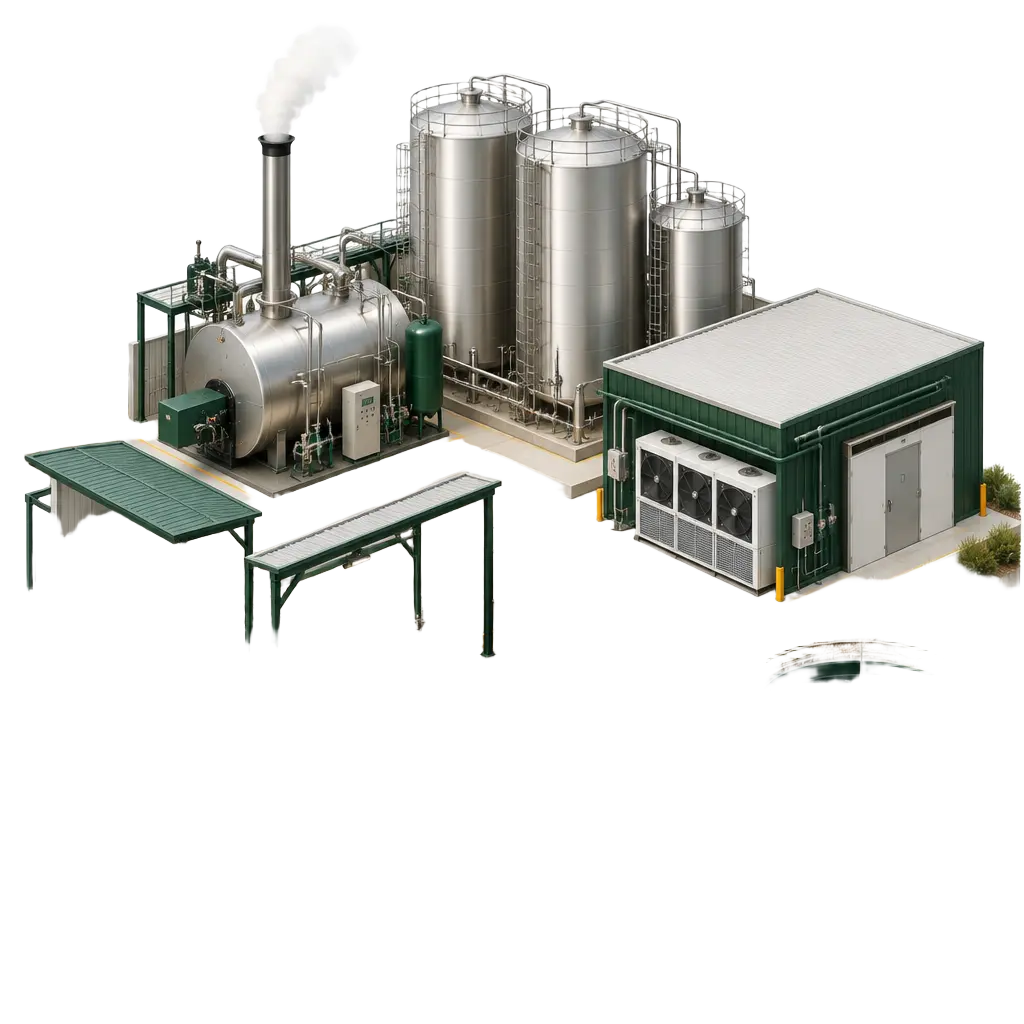
Steam, effluent and residues are separate questions
A processing facility may have both a large energy requirement and potential organic inputs, but not every by-product can be fed to the same treatment process. Safety, product quality, permitting and regulatory controls come before optimistic gas-yield assumptions.
What to check first
Plant type, daily or annual throughput if you know it, boiler fuel, thermal demand band, effluent treatment type, collected residues, and odour, water or permit considerations. No digestibility of fats or animal by-products is assumed.
Before and after pathways
A useful first look compares your current energy and waste handling with plausible alternative pathways — without numerical claims until measured heat and residue baselines are supplied.
Typical areas worth a closer look
- Steam and hot water — boiler fuel, demand profile and temperature bands
- Effluent loads — existing treatment, volumes and variability
- Fat, solids and residues — what is actually collected, and where it goes now
- Refrigeration and electricity — operating schedules and peak demand
- On-site versus off-site processing — transport, contracts and shared facilities
Information to bring to your first review
Recent fuel and electricity bills, measured effluent and residue volumes with units and reference periods, operating shift patterns, existing treatment infrastructure and any permit conditions. Leave unknowns explicit — no output or revenue is inferred from plant size.
Frequently asked questions
Can rendering residues become biogas?
It depends on composition and process suitability. Safety, quality and regulatory controls are assessed before any yield assumption.
Can we recover process heat?
Often worth assessing, but temperature and operating schedule determine usefulness.
Is a private assessment possible?
Yes, subject to account access and implemented privacy controls.
Sources & References
- energy.gov.au, Australian Government: business energy management
Publication: Date not verified
Observation period: Not recorded
Relevant page / section: Claim-level locator not yet verified
Last link / title verification: Not verified
Verification incomplete, do not rely on this reference for an investment or approval decision.
Source metadata and claim-level evidence require verification.
- Australian Renewable Energy Agency (ARENA), Australia’s Bioenergy Roadmap Report
Publication: Date not verified
Observation period: Not recorded
Relevant page / section: Claim-level locator not yet verified
Last link / title verification: 2026-10-11
Publisher link checked; individual claims, costs and regulatory applicability still require review.
Check scope and current applicability before relying on this reference.
Choose the path closest to yours
Which part of your operation needs attention?
- Steam and hot water
- Effluent loads
- Fat, solids and residues
- Refrigeration and electricity
- On-site versus off-site processing