Your factory uses energy and creates by-products. Could the two work better together?
Food and beverage sites often use electricity for refrigeration and equipment, heat for washing or processing, and treatment systems for organic material or wastewater. Some opportunities involve improving efficiency; others involve recovering energy or supplying neighbours. The right first step is to compare your costs, available resources and operating schedule—not choose a machine.
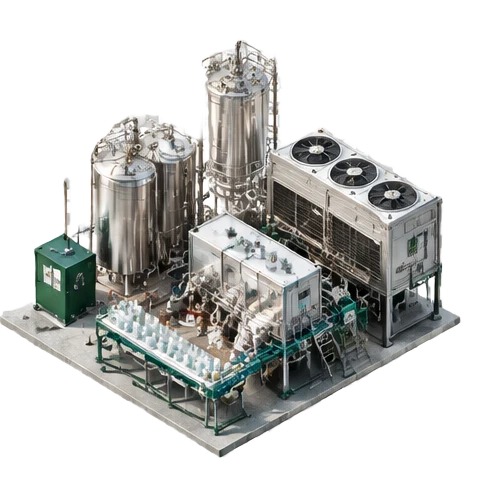
Three things to check before choosing equipment
Your starting evidence
product sector (dairy / brewery / beverages / bakery / produce / sugar / other), energy expense or kWh/GJ, process temperature, wastewater or organic by-product volumes, operating shifts.
Useful demand and delivery
Describe actual on-site use or customer requirements, timing and practical transport or connection constraints.
Qualified site review
Confirm equipment suitability, regulatory obligations and the full cost boundary before investing.
The opportunity is in the whole operation
The best savings may begin with refrigeration maintenance, heat recovery or process controls. Bioenergy becomes worth assessing when recoverable organic material, energy use and a practical technology route align. Any co-product sales depend on measured quality and qualified demand.
Information to bring to your first review
Use recent bills, measured volumes with units and reference periods, site operating schedules, existing contracts and evidence of quality. Leave unknowns explicit. No equipment output or revenue is inferred from business size.
Frequently asked questions
Can food waste run a factory?
Sometimes partially; it requires realistic measured conversion estimates and costs.
Will renewables replace our steam boiler?
Only after temperature, reliability and economics are compared.
Can we list excess material?
Yes, with explicit publication consent and review when that function is published.
Sources & References
- energy.gov.au, Australian Government: business energy management
Publication: Date not verified
Observation period: Not recorded
Relevant page / section: Claim-level locator not yet verified
Last link / title verification: Not verified
Verification incomplete, do not rely on this reference for an investment or approval decision.
Source metadata and claim-level evidence require verification.
- Australian Renewable Energy Agency (ARENA), Australia’s Bioenergy Roadmap Report
Publication: Date not verified
Observation period: Not recorded
Relevant page / section: Claim-level locator not yet verified
Last link / title verification: 2026-10-11
Publisher link checked; individual claims, costs and regulatory applicability still require review.
Check scope and current applicability before relying on this reference.
Choose the path closest to yours
Which part of your operation needs attention?
- Cold rooms and refrigeration
- Steam, boilers and wash-down hot water
- Food by-products and wastewater
- High waste/disposal charges
- Reliable supply and future expansion.